
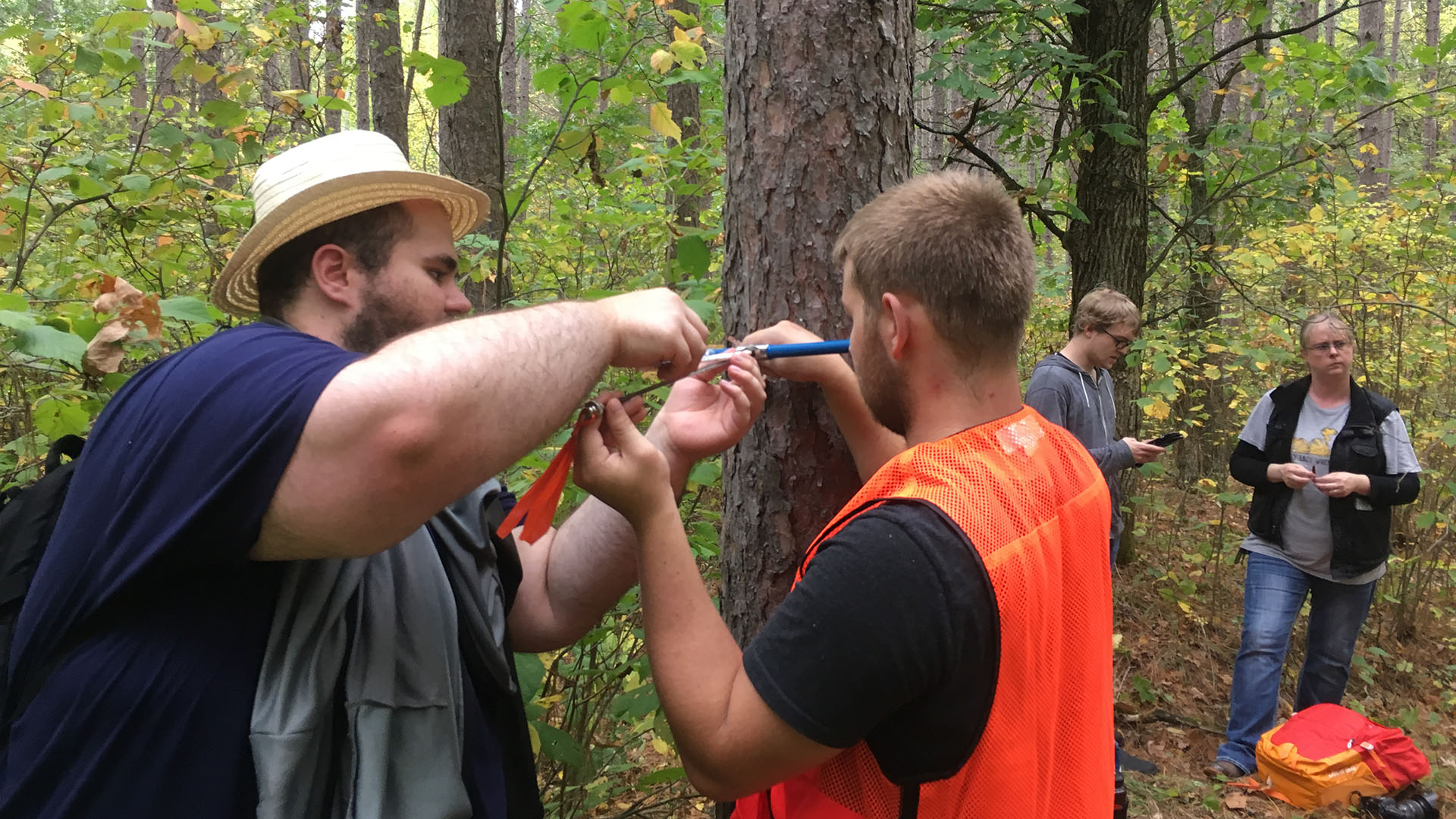
Bemidji State University’s new forestry program is evolving at a moment in time when forest professionals may be in more demand than ever.
For Jim Harding, Bemidji State’s new forestry program leader, building a pathway for the next generation is both a professional duty and a personal mission — particularly as long-time forestry workers are phasing into retirement.
“We’ve all been in the field for 30-plus years, and we’re transitioning out,” he said. “We knew this wave was coming, and this is an issue nationwide. There just aren’t enough foresters to replace those who retired.”
Concerns about this workforce shortage helped spark early conversations about whether Bemidji State could help meet the need for trained professionals in northern Minnesota and beyond.
Minnesota has long relied on trained forest technicians and managers, yet options for students have been limited. Within the state, Minnesota North College’s Itasca and Vermilion campuses offer the state’s only Society of American Foresters–accredited two‑year forest technology programs. Students from those campuses often transferred out of state to finish a bachelor’s degree.
“From the state’s perspective, we were losing educational opportunities, and we were losing people to the workforce in other states,” Harding said.
His task at Bemidji State is to help change that pattern.
The university’s new bachelor’s degree in forestry is a 2+2 program that admits students who complete a two‑year forest technology degree at Minnesota North. Once those students arrive in Bemidji, they move directly into junior‑ and senior‑level courses focused on forest ecology, silviculture, forest health and the measurement and modeling skills that guide responsible forest management.

Harding has spent his first year at Bemidji State visiting with Minnesota North partners, meeting with state and federal forestry staff and building relationships throughout the region.
“Without exception, people have been excited about what we’re doing,” he said. “We’re filling a dire need, and with the geography and the industry embedded in this part of the state, BSU is a natural place for this work.”
Bemidji State’s forestry program is seeking accreditation from the Society of American Foresters as it builds its foothold in Minnesota’s North Woods. Now in candidacy status, full accreditation — which could come around 2028 — would demonstrate the program’s quality. Harding said that accreditation would put BSU into a unique position as the only SAF-accredited bachelor’s program operating solely as a degree-completion destination.
Harding believes that the partnership model fills a unique need. Instead of competing with existing two‑year programs, it creates a clear path for students who want to advance into forest management, planning and leadership roles that require a bachelor’s degree.
In addition to the unique 2+2 structure, Harding said BSU’s distinctive coursework will set the program’s graduates apart. One such opportunity is a required dendroecology class that studies tree‑ring science. Harding says this kind of research opportunity is typically limited to graduate-level programs.
“It’s the way the model should work,” he said. “We should always be responsive to what’s on the horizon and the training our students need to excel in the field.”
This forward-thinking approach helps motivate Harding in his work to train the next generation of forest managers.
“We want healthy, productive forests,” he said. “That takes trained people who understand how to manage them. That’s what we’re building here.”
In addition to supporting a healthy future for our forests, he’s also pleased to have one more opportunity to help guide the future of a profession that has been his life’s calling.
“I feel fortunate that I get to be a part of this next wave of environmental stewardship,” he said. “We’re going to have thousands of people coming into different forestry jobs over the next 10 years. Being able to see that trajectory is exciting.”
More Information
Learn more about BSU’s bachelor of science in forest management in our Academic Catalog.
Read an earlier story on academic partnerships from September 2025: Partnerships with Two-year Colleges Forge New Pathways for Bachelor’s Degree