
Membership in BSU’s Operation LEAD consortium for two-year nursing grads grows to six
Central Lakes College and Lake Superior College have joined Bemidji State University’s growing Operation LEAD consortium, further expanding opportunities for Minnesota’s nurses to quickly and affordably complete bachelor’s degrees.
Operation LEAD creates pathways for nursing students to “Learn to lead; Expand their knowledge; Advance their careers; and Discover new jobs.” Participating students gain automatic admission to BSU after graduating from a consortium school. They also are guaranteed a spot in BSU’s RN-to-bachelor’s degree in nursing completion program, which they can complete in as little as one year.
Central Lakes College and Lake Superior College officially joined Operation LEAD during signing ceremonies on their respective campuses this week — Lake Superior College on February 10 and Central Lakes College on February 12. The new members bring the total number of Operation LEAD partner institutions to six, including Alexandria Community & Technical College, Minnesota North College, Northwest Technical College and Pine Technical College.
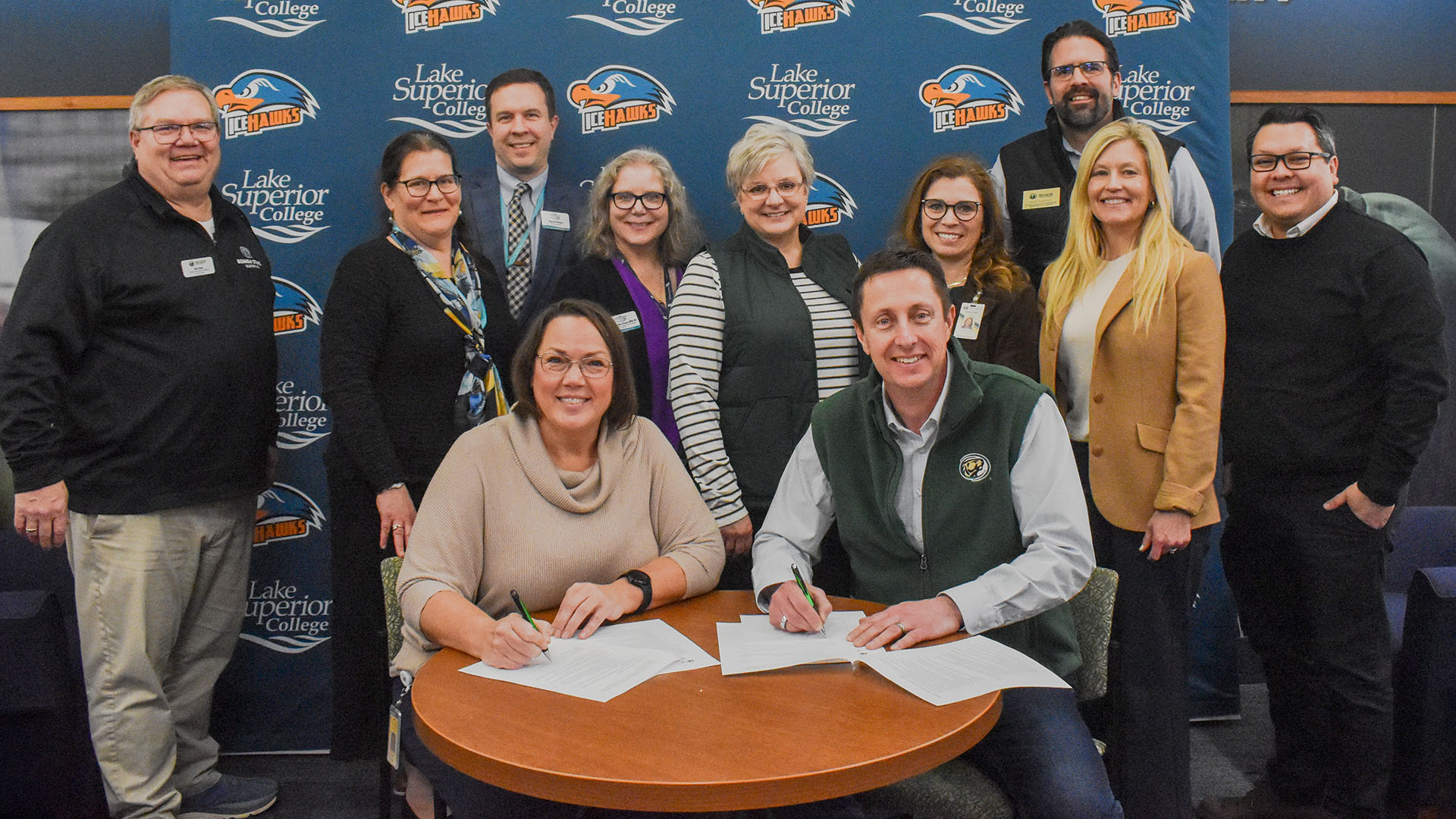 Lake Superior College officially joined Operation LEAD on February 10.
Front Row: L to R: Dr. Linda Kingston, LSC president; Dr. John L. Hoffman, BSU and Northwest Technical College president.
Back Row: L to R: Dan Voss, BSU director of academic partnerships; Dr. Lisa Schlotter-hausen, LSC interim vice president of academic and student affairs; David Kline, LSC vice president of advancement and external relations; Anna Sackette-Urness, LSC dean of allied health and nursing and student support; Nicholle Bieberdorf, BSU senior nurse adminis-trator and Northwest Technical College dean of allied health; Dr. Christy Cook, BSU pro-fessor of nursing; Mike Simpson, BSU nursing student services coordinator; Jaimee Duffy, BSU director of career advancement; Henoc Preciado, BSU head of staff, Office of the President.
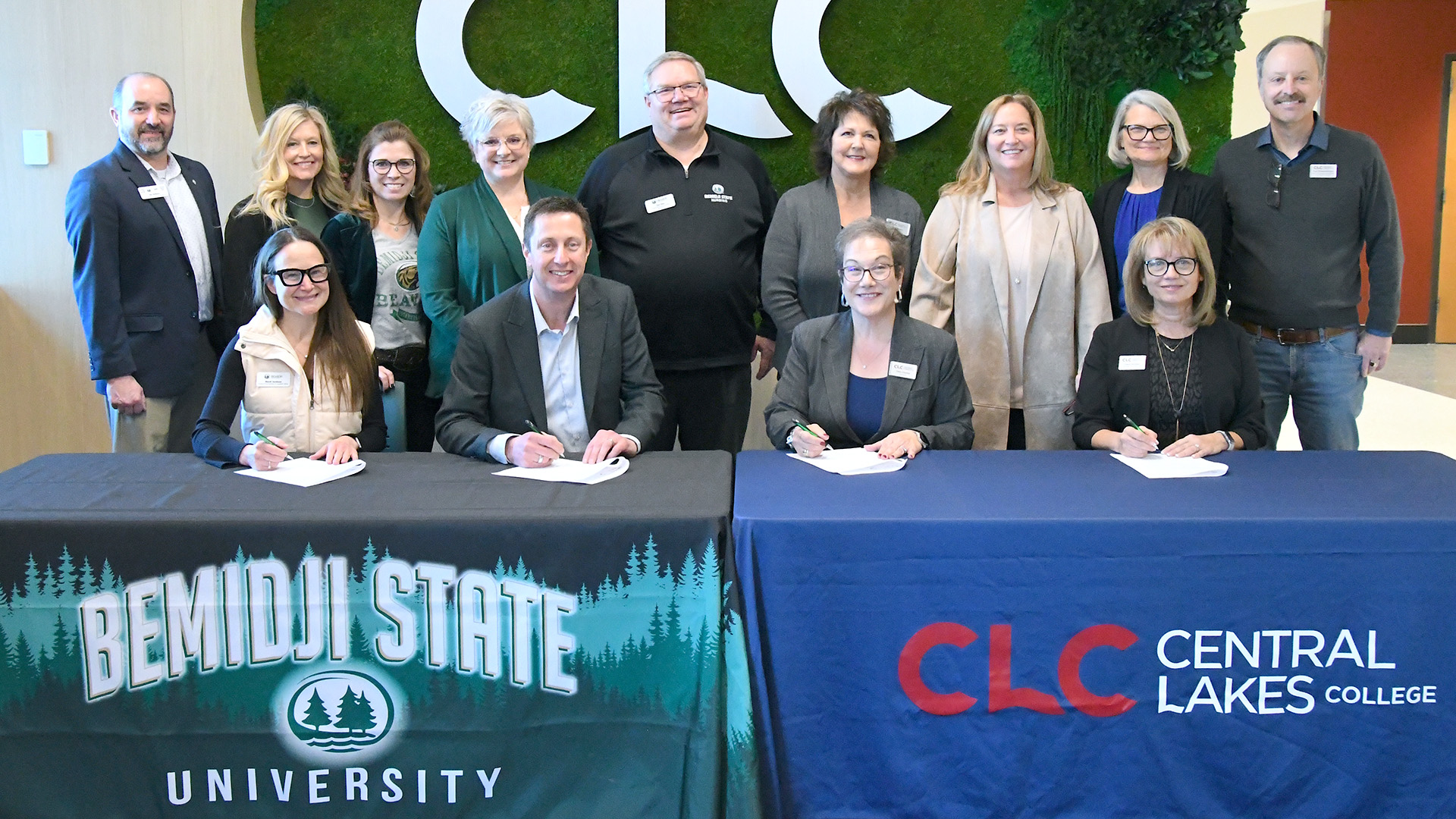 Central Lakes College officially joined Operation LEAD on February 12.
Front Row: signing L to R: Dr. Marah Jacobson, BSU provost & vice president of academic affairs; Dr. John L. Hoffman, BSU and Northwest Technical College president; Dr. Hara Charlier, CLC president; Cheryl Norman, CLC vice president of academic and student affairs.
Back Row:L to R: Ben Hoffman, BSU vice president for enrollment management; Jaimee Duffy, BSU director of career advancement; Dr. Christy Cook, BSU professor of nursing; Nicholle Bieberdorf, BSU senior nurse administrator and Northwest Technical College dean of allied health; Dan Voss, BSU director of academic partnerships; Jodi Elness, CLC academic advisor for nursing programs; Jill Lechner, CLC associate degree nursing instructor; Anne Nelson-Fisher, CLC dean of liberal arts & sciences; Paul Preimesberger, CLC dean of enrollment management and student success.
The signings were part of BSU’s “For the North” Presidential Road Show, which has seen BSU President John L. Hoffman and other university leaders visit 17 communities in northern Minnesota and eastern North Dakota. The Road Show has promoted the university’s “For the North” targeted-initiative campaign and has featured meetings with alumni and friends, and industry and other site visits. The tour gives BSU leadership an opportunity to speak hear directly from community leaders about their needs and to explore opportunities for collaboration and cooperation.
Why should nurses earn a bachelor’s degree
Job opportunities for Minnesota nurses are projected to increase significantly in the next decade. According to Minnesota’s Department of Employment and Economic Development, registered nurses are the fourth-most in-demand profession in Minnesota. DEED projects more than 41,000 open positions in the next 10 years and more than 5 percent growth in the number of available jobs.
Bachelor’s degrees create opportunities for RNs to expand their careers and their salaries. The American Nursing Association says average salaries for nurses with bachelor’s degrees earn about $17,000 more per year than nurses with associate’s degrees — which, over a 30-year career, means a bachelor’s degree is worth more than $500,000. A bachelor’s degree opens doors to jobs such as charge or travel nurses, case managers, directors of nursing or chief nursing officers, clinical research coordinators and more. Bachelor’s degrees also allow nurses to pursue specialized role in critical care, oncology, pediatrics and emergency medicine.
About Operation LEAD
Operation LEAD was designed to help working professionals pursue these career-expansion opportunities, built around a flexible, accommodating schedule. Students have five opportunities each year to start courses which only last eight weeks each and are offered 100% online. Nurses also have the option to enroll part-time if that best fits their schedules.
Nursing students can begin working on bachelor’s degrees before completing their NCLEX — a national licensing examination for entry-level nurses. However, nurses who have passed the exam will receive 15 upper-division course credits through BSU’s RN Advantage program.
Other benefits include the opportunity to apply for one of 20 scholarships — either a $1,000 transfer scholarship, a $2,500 Minnesota Workforce Development Scholarship, or both — that are reserved specifically for Operation LEAD nursing students, opportunities to meet with BSU academic advisors and register for BSU courses on-site at their two-year college. Every Operation LEAD student also receives a personalized graduation plan, and BSU nursing graduates also complete Public Health Nurse Registration and End-of-Life Nursing Education Consortium certifications, in addition to a bachelor’s degree.