
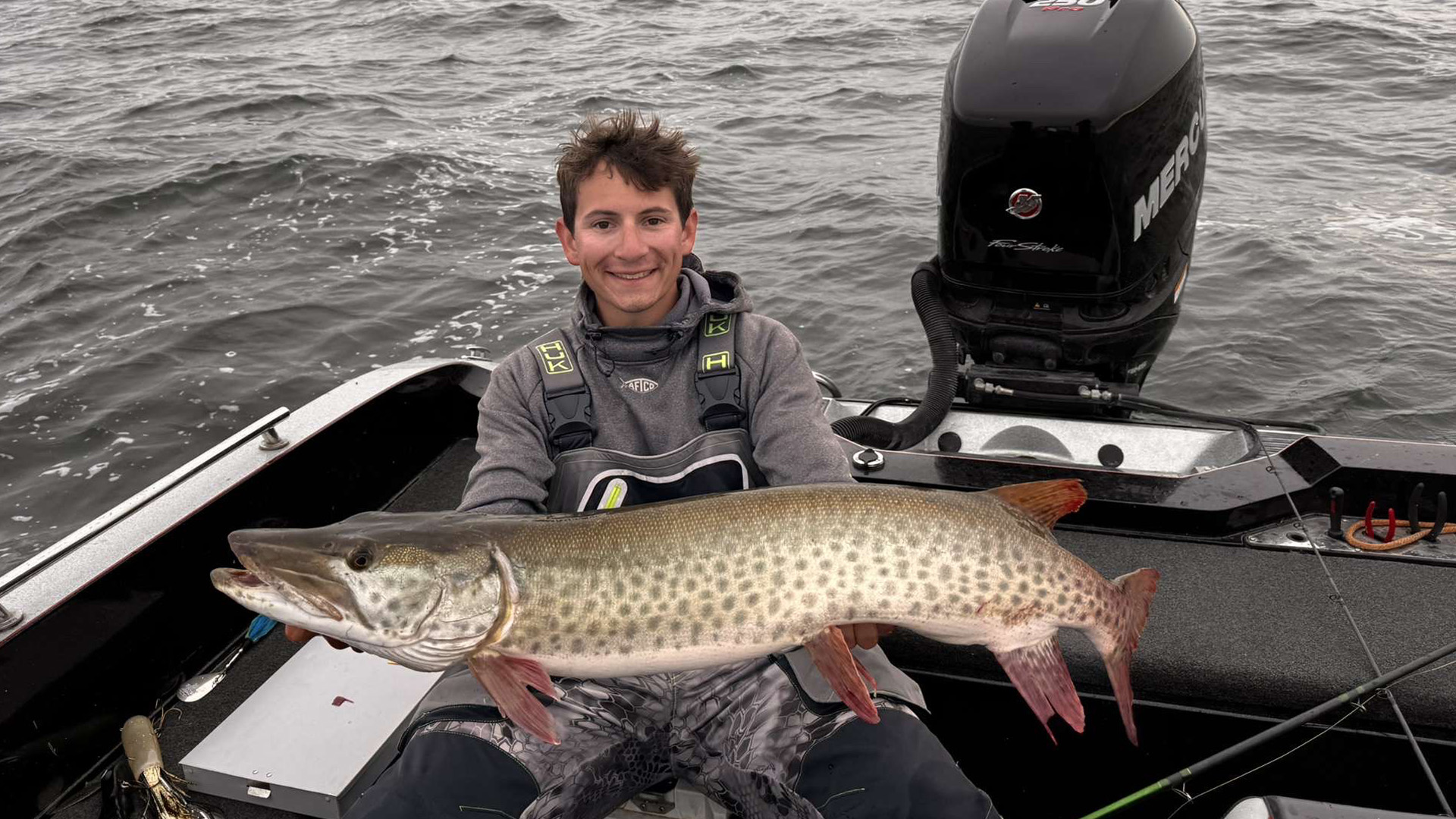
As a Bemidji State University graduate student, Baylor Short may spend his entire day searching Leech Lake for a single fish.
The graduate student is leading a research partnership between BSU, the Leech Lake Band of Ojibwe and Minnesota Department of Natural Resources to answer questions about how muskies are using Leech Lake. The study also explores whether modern fishing technology might be affecting their health.
Short, who earned his undergraduate degree at BSU in 2024, is leading much of the fieldwork for a three-year muskie tracking project directed by Dr. Andy Hafs, professor of biology at BSU.
Short says that in addition to providing valuable science, the project is personally meaningful for him.
“I grew up on Leech Lake,” Short said. “Fishing muskies was my go-to when I was younger, and I still do it.”
When Hafs brought forward an opportunity to pursue the project as a graduate researcher, Short was already working as a fisheries specialist with the Leech Lake band. Several conversations later, Short was able to tackle the muskie project as both his research focus and primary aspect of his job.
The study grew out of concerns raised by anglers and fisheries stakeholders about the rapid adoption of forward-facing sonar, a technology that allows anglers to locate fish in real time.
“Front-view sonar has gotten so good,” Hafs said. “These guides and anglers can go out now and catch 15 muskies a day instead of just one, and they can find the fish that are down deep.”
With increasing reports of dead fish on shore, researchers wondered whether the new technology was potentially increasing stress — and, as a result, mortality — for the muskies. Short’s project aims to find out.
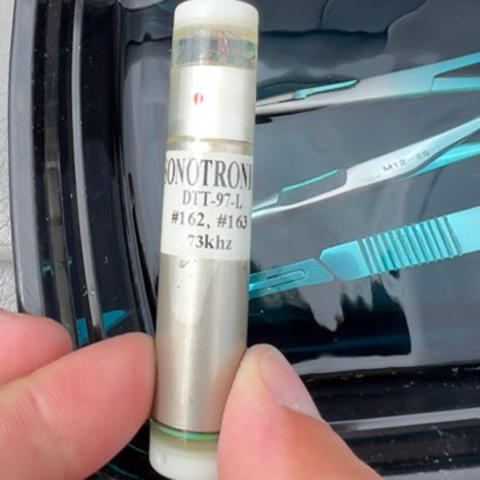
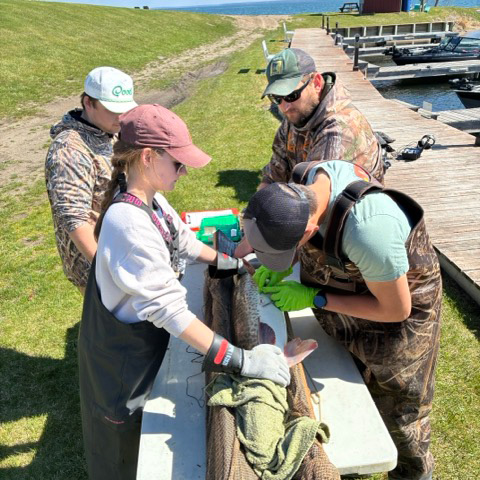
To gather data, Short and his team fish for muskies themselves. When a fish is caught, they implant a small electronic tag that can collect and share information such as water temperature and depth and the fish’s movements. A network of receivers positioned around the lake gathers information, in addition to data that researchers can gather from their boats.
The work demands patience.
Leech Lake spans roughly 112,000 acres, and muskies do not always behave as expected. Some seem to settle into a relatively small area, while others travel several miles in just a few days.
“We were kind of going into this study thinking these fish were going to post up in one spot and not move a whole lot,” Short said. “There are other fish that definitely are using as much of the lake as they can.”
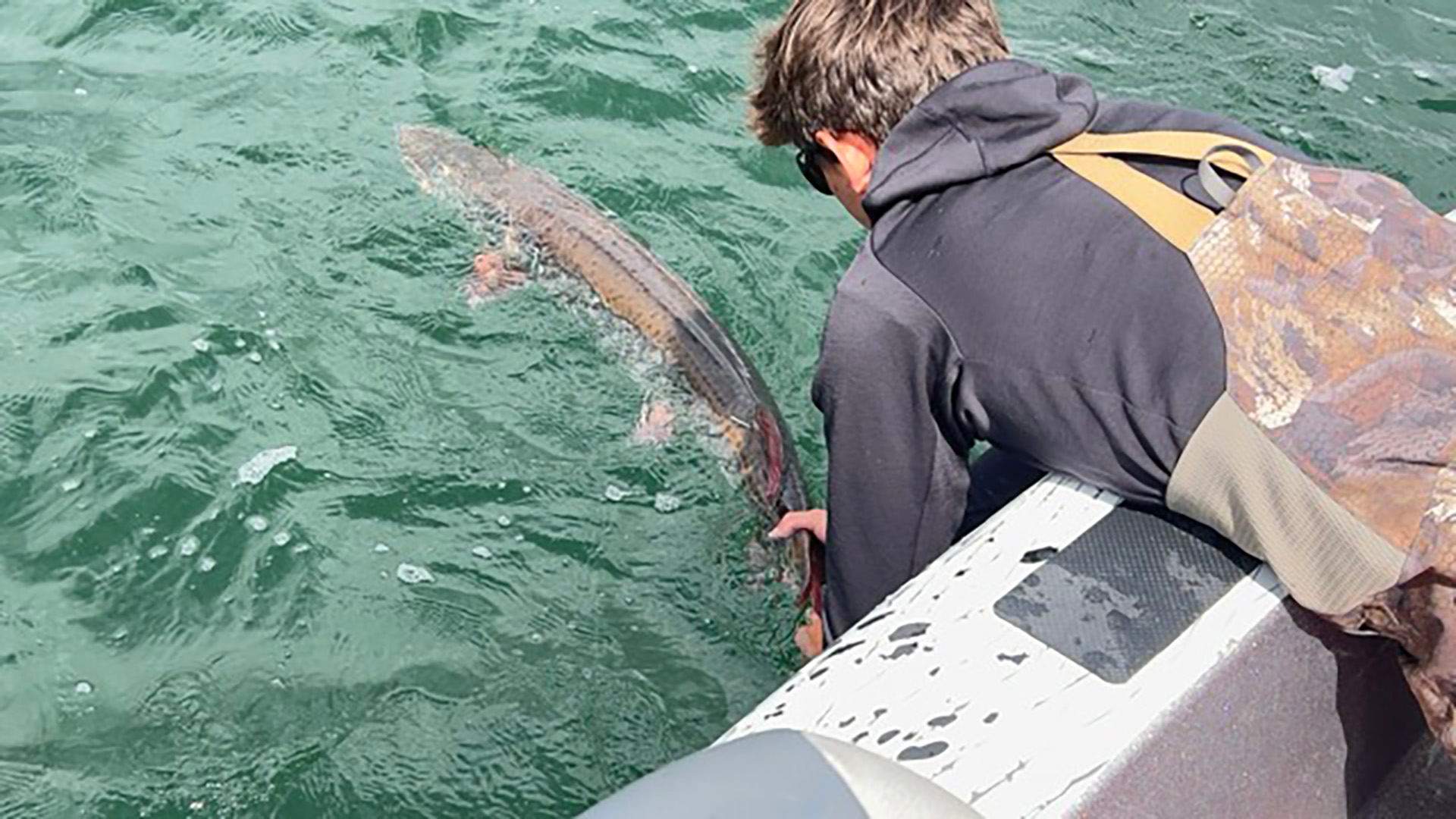
With the tags being surgically implanted, one early concern was whether the research itself could be harmful to the fish that were being tagged. However, Hafs says a number of the fish they have tagged have been caught by anglers and shown to be in good health.
“Some have been caught and released more than once,” he said.
So far, there have been no recorded or reported deaths of tagged fish.
Hafs said that in addition to providing useful data that will help guide future fisheries management decisions, the project also showcases the value of collaboration between BSU, the state Department of Natural Resources and the Leech Lake Band of Ojibwe.
While Short is leading the project for his graduate work, a number of undergraduate students have supported his work in the field, gaining real-world experience that is impossible to replicate in a classroom.

Short credits these kinds of experiences, and the mentorship he has received over the years from Hafs and others, with helping launch his career.
Short said his undergraduate classes at BSU often included less than 20 students. He said this created unique opportunities to build relationships not only with his instructors, but also with his classmates. Now providing guidance to undergraduates himself, Short’s BSU experience has come full circle.
“I’m really fortunate for the opportunity I can have right now,” he said.
The three-year project will conclude in 2027 and is supported by funding from the Leech Lake band of Ojibwe, Muskies Inc. Bemidji Chapter, Bemidji State University, the Minnesota Department of Natural Resources and the MN-FISH Sportfishing Foundation.