
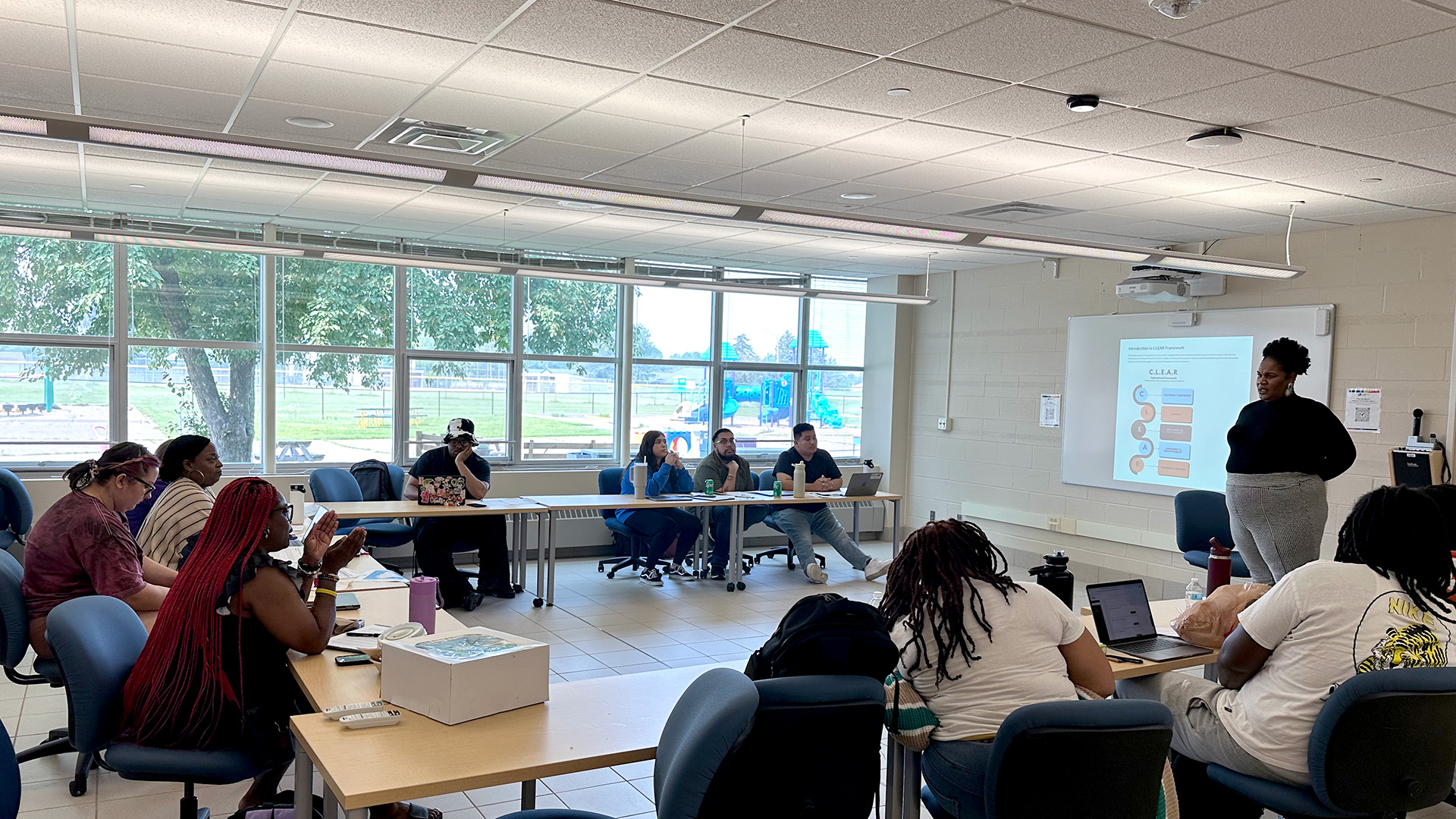
A new professional education program at Bemidji State University is creating opportunities for elementary-school paraprofessionals to complete a bachelor’s degree and become licensed classroom teachers.
The program addresses Minnesota’s growing need for new teachers by giving paraprofessionals credit for their work through an apprenticeship model. It has grown rapidly, from 13 students during its first cohort in the summer of 2025 to a projected enrollment of more than 60 for the summer of 2027.
Dr. Lisa Krall, associate professor of professional education and one of the program’s lead faculty, says the innovative program helps working paras overcome barriers that may prevent them from pursuing licensure.
“Our schools currently have a lot of paraprofessionals who would make wonderful teachers,” she said. “But they may not be able to pursue the education they need for licensure due to costs, the ability to continue working while going to school, a lack of support networks or other factors.”
BSU’s program, supported by a first-in-the-state partnership with Teacher Apprenticeship Minnesota, creates a pathway for working paras to pursue elementary education licensure while remaining on the job in their classrooms.
Mariama Gillespie, a Cohort 2 para who started the program in the summer of 2026, works at Neill Elementary School in Crystal, Minnesota. She said the program has helped connect her passion for her community with her future as an educator.
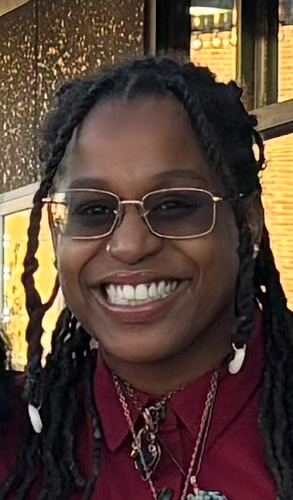
“This experience has helped me see that I am exactly where I am supposed to be,” she said. “I have learned that education is not just about academics — it is about creating safe spaces, building relationships, recognizing each scholar as an individual and making sure they know they’re seen and valued. I am seeing first-hand how much of an impact a caring and supporting educator can have.”
Students Earn a Degree and Licensure in Three Years
Krall said that during the three-year process — which culminates in both a bachelor’s degree and a Minnesota K-6 teaching license — paraprofessionals are paired with a mentor, take classes and participate in professional development opportunities. In their third year, paraprofessionals gain credit for their licensure-required student-teaching experience through work in their current schools.
“Some of our paraprofessionals have been working for two years in their school districts, and some have 9 or 10 years of experience,” Krall said. “They’ve been identified by school administrators and recommended for this program, so they’ve been pre-selected as people who are likely to be excellent classroom teachers.”
In addition to an accelerated path to licensure — which Krall says can become even shorter than the prescribed three years through credits for prior learning — paraprofessionals benefit from significant support and professional development networks, weekly meetings with their mentors and BSU professors, and membership in a cohort of other paraprofessionals seeking teaching licenses. School administrators also commit to supporting selected apprentices for the duration of their time in the program.
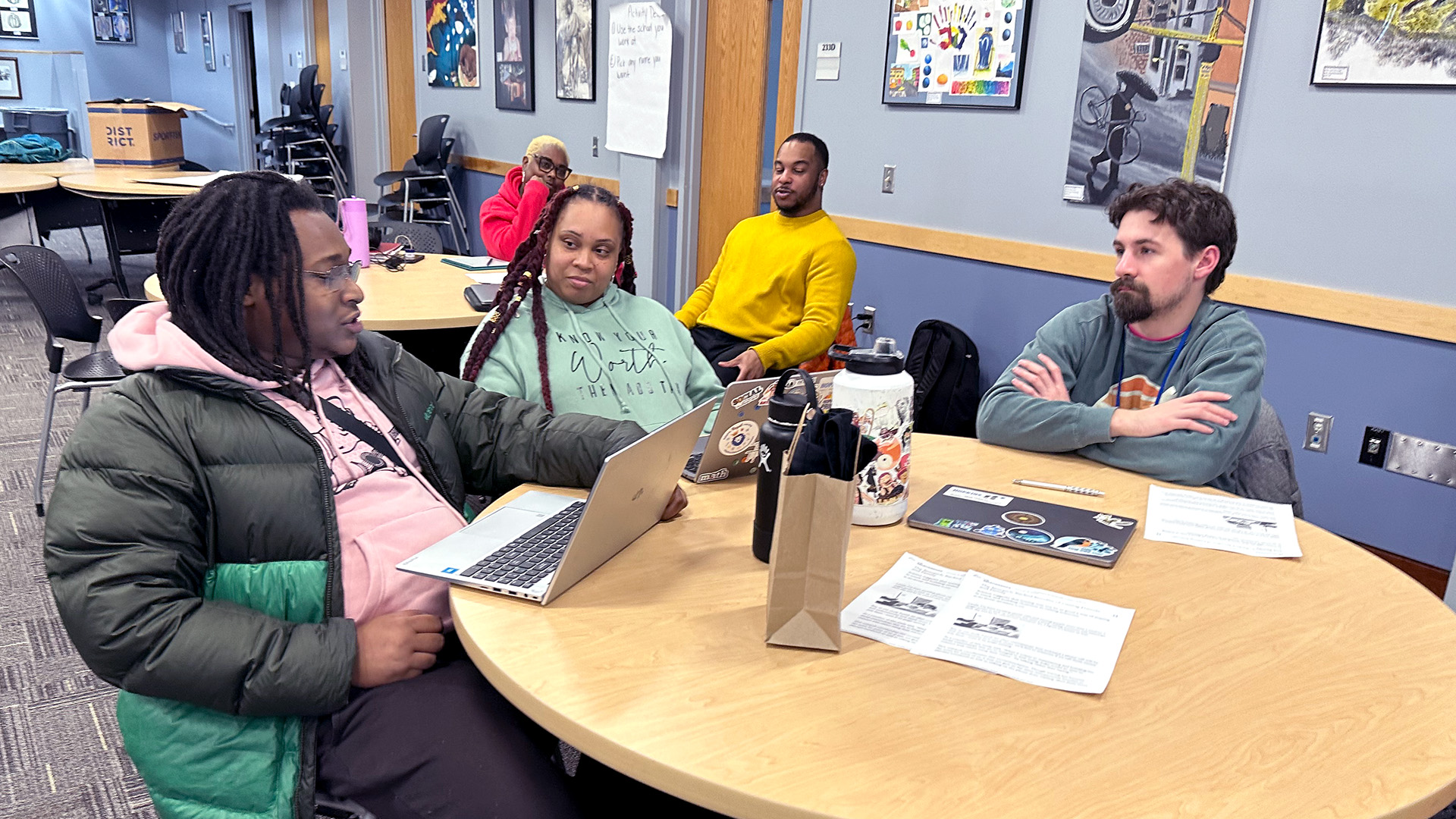
Adam Hebeisen (above, far right), a para at L.H. Tanglen Elementary School in Minnetonka, Minnesota, was one of the first students to join the program during the summer 2025 cohort. He said the program’s apprenticeship model has allowed him to gain invaluable real-world teaching experience.
“Being in the school, working in the classroom and spending time with actual students and teachers is a great way to experience first-hand what it means to be an educator,” he said.
A Specially Crafted Curriculum
Krall says the program’s coursework meets state licensure requirements and has been specifically rearranged to meet a working paraprofessional’s needs.
“We’ve tried to make everything overlap,” she said. “A student may be taking individual courses, but if there are concepts and ideas and assignments that overlap, they can combine assignments. Then by working with their mentor, they’re immediately applying what they’re learning through the apprenticeship.”
Extensive Professional Development
Through the apprenticeship and a rapidly expanding network of partners, participants can extend their learning through professional development.
In addition to its partnership with Education Minnesota — which leads the Teacher Apprenticeship Minnesota program — BSU also collaborates with organizations such as the state’s departments of education and labor & industry; the Kitty Anderson Youth Science Center; St. Paul-based Black Men Teach and Amazeworks; the Minneapolis-based Freedom Schools program; and others.
Krall said the additional training not offered through a traditional on-campus professional education program can include strategies for social-emotional learning and culturally competent teaching practices.
Interest Growing Exponentially
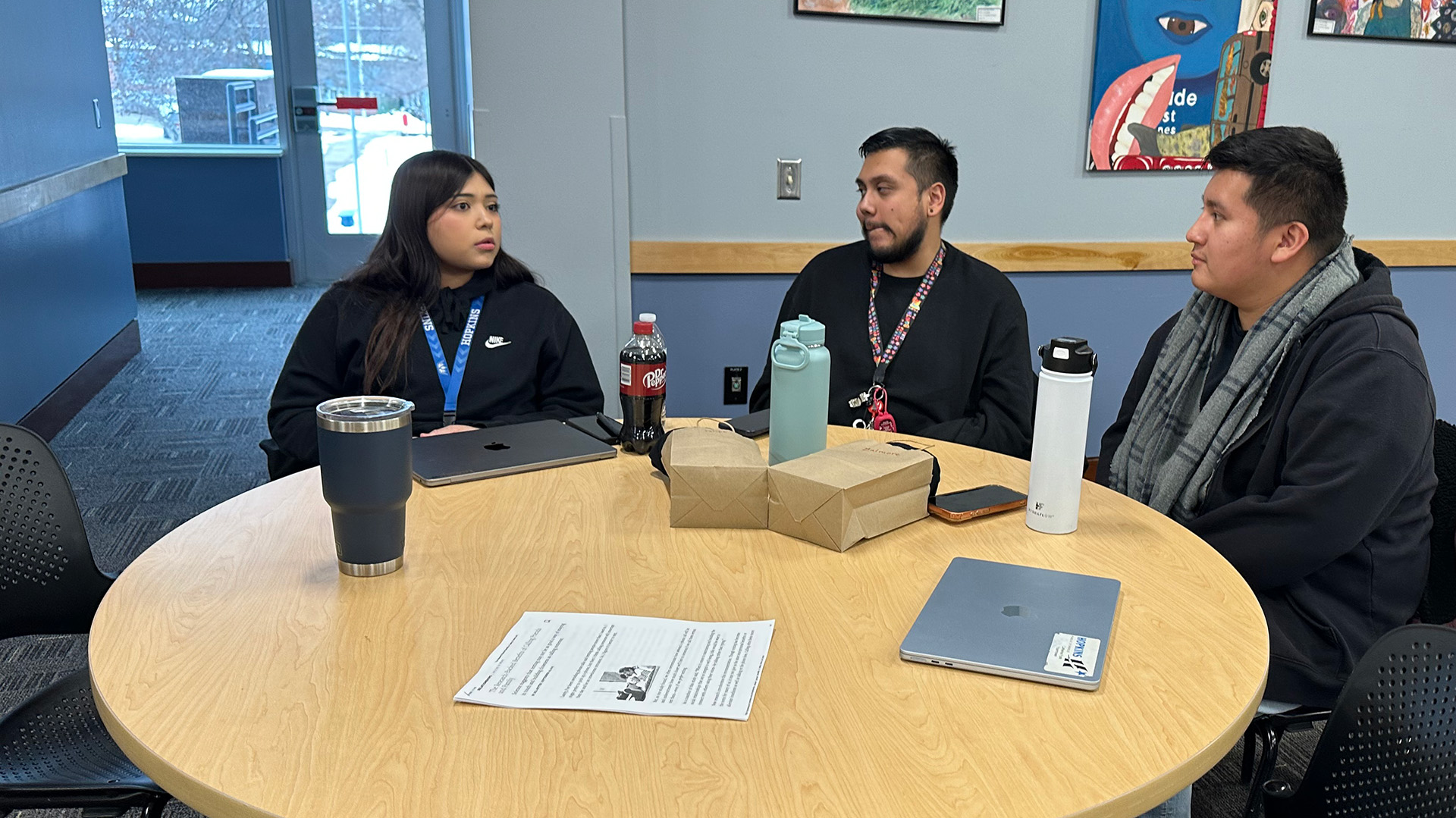
When launching the program in the summer of 2025 with a cohort of 13 students, BSU focused its work with school districts in the Minneapolis-St. Paul metropolitan region. The second cohort expanded to include paras in the Cass Lake-Bena schools, the Circle of Life Academy on the White Earth Reservation and the Lower Sioux Indian Community in Morton, Minnesota. BSU projects further expansion for a program already experiencing exponential growth. After the summer 2026 cohort grew to 32 students, program leaders are already planning for enrollment to double again in summer 2027, to an early estimate of more than 60 apprentices.
“Ultimately, we at BSU are working to help prepare elementary school teachers for licensure,” she said. “We have people in Robbinsdale, Hopkins and Anoka, and other districts interested in joining. We knew this needed to grow bigger.”